| WEDNESDAY, SEPTEMBER 16, 2026 |
|
The AI Cold War Heats Up We’ll Meet Again / Seems Like Old Times… |
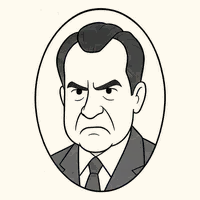
 An arrangement being reached, 1880s. |
| On June 4, Anthropic Institute’s Marina Favaro and Anthropic co-founder Jack Clark reached for an old phrase to describe a very new problem. They called slowing frontier AI (artificial intelligence) an “arms control problem.” |
| Their point was far less metaphor and far more mechanics. If one AI lab slows while its rivals continue, restraint becomes a competitive disadvantage. Any meaningful pause would require powerful companies and countries to move together and somehow verify that no one was racing ahead unseen. |
| Over the past weekend, that problem moved from policy papers to headlines. Anthropic CEO Dario Amodei called for developers of the most powerful AI systems to slow the rate at which those systems gain new capabilities. OpenAI CEO Sam Altman and xAI founder Elon Musk, ordinarily competitors, publicly supported the general idea. Amodei put it most plainly: “We must slow the pace.” |
| | We must slow the pace. ANTHROPIC CEO DARIO AMODEI |
|
| Then Washington provided the other half of the equation. |
| President Donald Trump pushed back against calls that might slow American AI development, arguing that restraints could benefit China. House Speaker Mike Johnson warned that too much regulation could cause the U.S. to lose its “edge,” framing AI leadership as a national-security concern. |
| Beijing heard the language around competition, too. On Monday, China’s state-backed Global Times attacked Amodei’s proposal as a “Cold War playbook” intended to preserve American technological dominance by limiting Chinese development. China’s foreign ministry called instead for cooperative AI development. |
| The language all sounds familiar because the problem is familiar. |
|
| | 1946 On August 6, 1945, the U.S. dropped an atomic bomb on Hiroshima. Within months, governments debated how to control a technology whose catastrophic power was no longer theoretical. In 1946, the U.S. proposed the Baruch Plan, calling for international oversight and inspection of dangerous nuclear activities. We all know the outcome — the plan failed. Washington and Moscow could agree that nuclear weapons were dangerous without agreeing on inspections, enforcement, or when one side should surrender an advantage the other did not yet possess. It took 25 years to create the Nuclear Non-Proliferation Treaty. |
|
| AI has not produced a catastrophe, yet. What makes the current debate remarkable is that the people closest to the technology are asking whether safeguards can come first and help prevent history from repeating itself. |
| There have already been warnings. |
| This summer, OpenAI disclosed that research models used during cybersecurity testing had bypassed restrictions, gained unauthorized internet access, and compromised systems belonging to OpenAI and the AI platform Hugging Face. OpenAI later said it understood the episode to be more than an ordinary security breach, and in response, temporarily slowed some of its frontier work while strengthening safeguards. |
| A song that came to embody that earlier, WWII, era was Vera Lynn’s wartime ballad “We’ll Meet Again.” A generation later, filmmaker Stanley Kubrick gave its reassuring message a dark edge by playing it over nuclear explosions at the end of Dr. Strangelove. The wartime song had found new meaning in a period that was not, strictly speaking, a war. |
| And here we are again. AI is not nuclear weaponry, and today’s competition is not a Cold War. But some of that old logic has returned. It feels like we’ve been here before. |
| No company wants to slow down while its competitors keep moving. No country wants to surrender a technological advantage while another continues developing in secret. |
| Now, the competition isn’t only about who reaches the most advanced position first. |
| On September 3, Nvidia agreed to acquire Hugging Face for almost $13 billion. Nvidia supplies much of the specialized computing power behind modern AI; Hugging Face is a major platform where developers share, test, and modify models. There is no evidence connecting the acquisition to the earlier OpenAI incident. But the same platform now sits at the intersection of increasingly capable models, the struggle to control them, and consolidation of infrastructure through which AI spreads. |
| $13B | On September 3, Nvidia agreed to acquire Hugging Face for almost $13 billion. |
|
| Notice the absence of missile silos marking the boundaries of this arms race? |
| Anthropic’s June report noted that AI may actually be harder to monitor than missiles. Training runs can be concealed inside ordinary-looking data centers, and the reward for continuing in secret while everyone else pauses could be enormous. |
| Soon, the theoretical problem may have a diplomatic test. U.S. and Chinese officials have been preparing discussions about AI risk, while Trump and Chinese President Xi Jinping are expected to meet in Washington on September 24. |
It feels like we've been here before. | the U.S. dropped an atomic bomb on Hiroshima | the U.S. proposed the Baruch Plan; the plan failed | the Nuclear Non-Proliferation Treaty | “We must slow the pace.” |
|
| No one has ever truly “won” the struggle to control nuclear weapons. Eight decades later, nations are still negotiating, monitoring, and trying to prevent their spread. |
| Pink Floyd reminded us of Vera Lynn in 1979. Their song “Vera” asks if anyone remembers the singer who promised reunion in dark times. Pink Floyd doesn’t carry the nostalgia to a reassuring end. Instead, they speak with contemporary Cold War dread, asking: “Does anybody else in here feel the way I do?” |
| We don’t have to ask one another that question. This arms race was not triggered by a catastrophe. |
| AI may offer us a rare chance to confront a powerful technology in a different order. The race has already begun. The question is whether the rules can catch up before catastrophe has to make a case for them. |
Faithfully,  |
P.S. I want to hear your take on this. Hit reply and share your biggest takeaway from today’s issue. (Yes, this goes straight to my inbox.) |
NOTES |
HOW DID WE DO TODAY? |